Backbone
Why Research & Statistics Matter in Psychology
Anya Aswin
2/18/20264 min read
Why Students Struggle with Stats
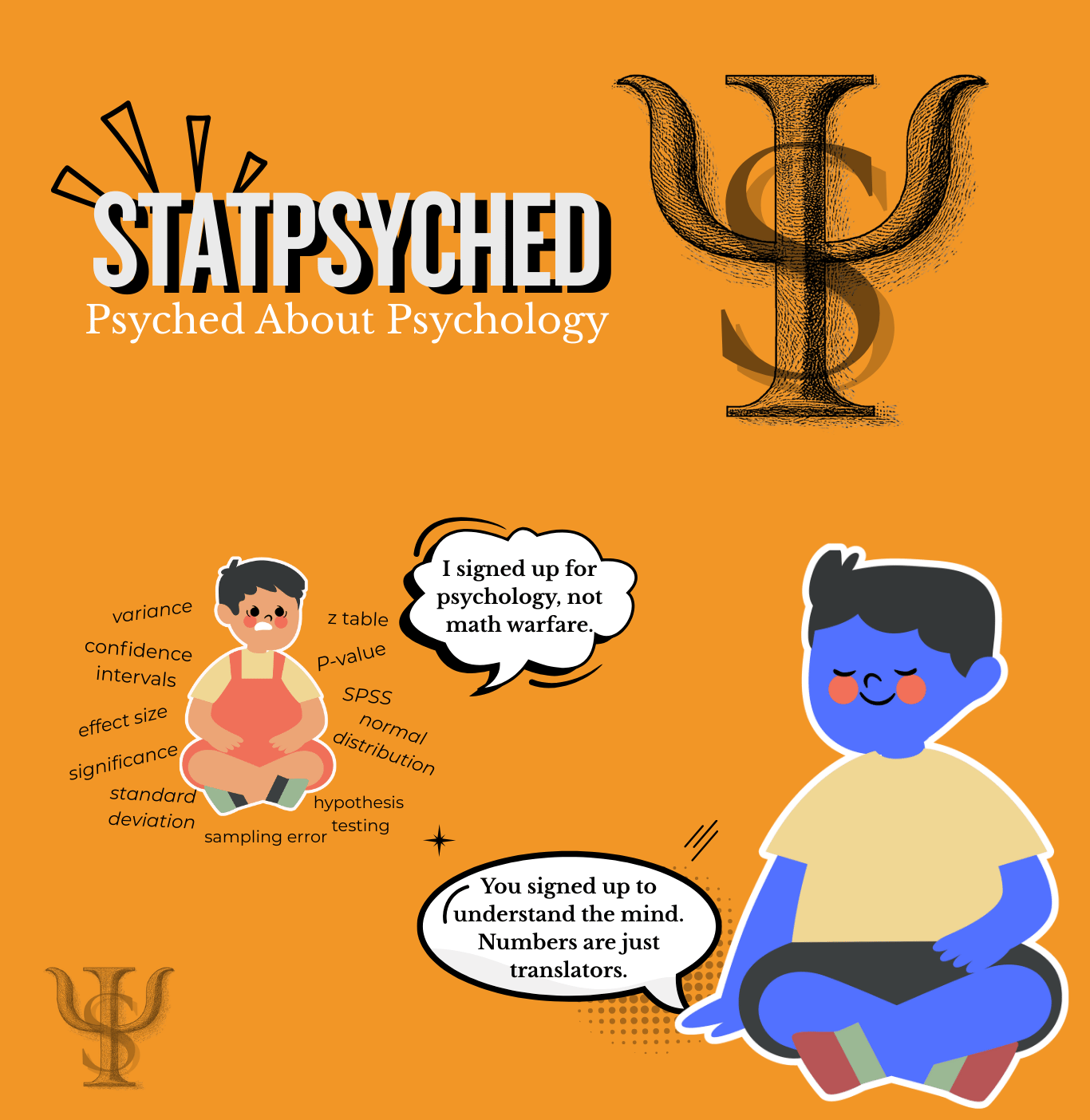
Let’s be honest, most psychology students enter the field because they’re fascinated by human behaviour, mental health, relationships, trauma, and the intricacies of the mind, not because stats piques their interest. I bet it feels overwhelming, especially in the first year, when you’re thrown into the deep end of stats. It may feel like you’re drowning–having to juggle research methods, SPSS, p-values, confidence intervals, and words like “parametric assumptions.”
If you’ve ever complained about having to do stats (commonly confused with math) in a psych degree, trust me, you’re not alone. But the truth is, research and statistics are the backbone of psychology. Without them, psychology would be a mere collection of interesting opinions, rather than a scientific discipline.
If you slow down and think about it, you’ll realise that every theory, every approach, and every claim about what improves your mental health exists because someone tested it. Research methods tell us HOW to test ideas properly, and statistics helps us understand whether the results actually mean something or are a stroke of luck. In other words, statistics works like a filter that separates the real findings from the fluff. For example, when a study claims a therapy reduces anxiety, statistics tells us whether that improvement is meaningful or just noise.
However, like most would agree, knowing that stats and research are an integral part of psychology doesn't automatically make them easier.
Translating Numbers into Meaning
One of the biggest student pain points is feeling overwhelmed by the mountain of abstract concepts psychology has to offer. When initially introduced, concepts like null hypotheses, effect sizes, or regression models can make you feel like a fish out of water. A strategic way of coping with this feeling is to translate numbers into human meaning. Instead of thinking, “the p-value is 0.03”, think, “this means the result is unlikely to be due to random chance.” Instead of memorising definitions and test applications, focus on what question each test answers.
Practice Over Talent
While softwares like SPSS and R look daunting at first, it is important to remember that you might not get it right on the first try and that’s completely alright. It sounds cliché, but practice really does build confidence here. No one feels confident the first time, the trick here is repetition, not talent. Joining StatPsyched workshops, working with a friend, and redoing class examples helps you develop skill, confidence, and muscle memory.Through this, you not only solidify your understanding, but also strengthen foundational concepts, enabling you to progress with greater ease. Eventually, it stops feeling like chaos and becomes more organic.
Statistics as a Career Skill
Lastly, don’t treat statistics as something you need to get through, think of it as a skill. It is more valuable than you might think. Research and statistical literacy are not just academic hurdles to clear, they are essential for becoming a competent psychologist. They allow you to contribute meaningfully to the progress of the field, design stronger research during your PhD, and critically evaluate new findings instead of relying on outdated knowledge. Even as a practitioner, the ability to read and interpret contemporary research keeps your work evidence-based and current. In a discipline that evolves constantly, understanding research and stats is what allows you to grow with it rather than fall behind.
The professional advantages are not all, strong research skills also help academically and create a real competitive edge. They strengthen your university applications, improve your employability in industry, increase your chances of publishing and securing funding, and position you ahead in an increasingly competitive landscape. Understanding data, rather than merely tolerating it, sets you apart immediately.
You’re Not Bad at Psychology
Keep in mind that struggling with research methods doesn’t mean you’re “bad at psychology”, it means that you haven’t had enough exposure yet. Competence comes from practice, not innate intelligence.
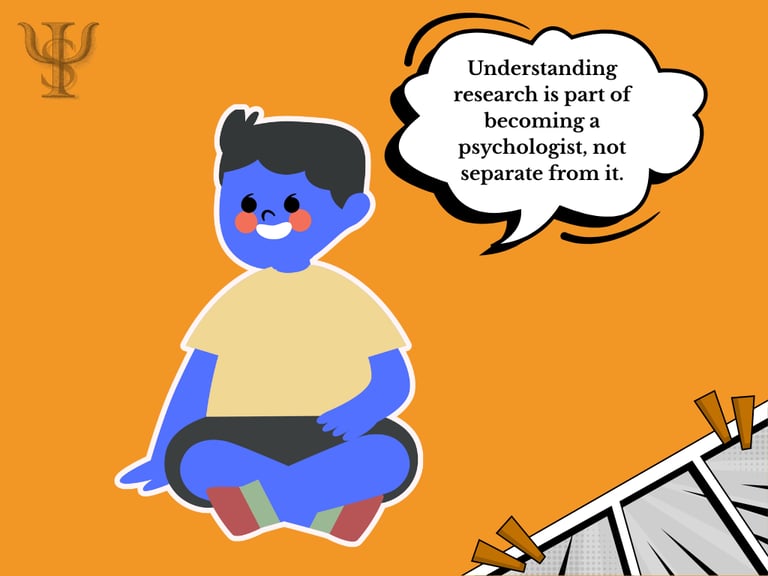
Learning research properly isn’t about becoming a statistician. It’s about becoming a better psychologist. That is exactly why StatPsyched exists. If you want structured support, hands-on training, and a space to actually practice these skills, our upcoming Statistics Bootcamp and Quantitative Research Internship are designed to give you that foundation and confidence. You don’t have to figure it out alone. StatPsyched is built to support students exactly at this stage.
About the Author
Anya Aswin is an MSc Occupational and Organisational Psychology scholar with training in cognitive science, organisational psychology, and mental-health communication. She has worked across academic, nonprofit, and applied settings, focusing on translating research into clear, evidence-based insights about human behaviour and technology. Anya is committed to making psychological science accessible without compromising rigor.
She holds an MSc in Occupational and Organisational Psychology from the University of Liverpool (UK) and a B.A. (Hons.) in Psychology from O.P. Jindal Global University (India), including a semester exchange at the University of Hamburg (Germany).
Welcome to StatPsyched, your trusted platform for psychology research & statistics learning.
Making statistics & research methodology accessible for students everywhere.
© 2025. All rights reserved.