To the Psychology Student Who Didn’t Clear NEET
Annu Kadian
3/3/20265 min read


Dear Students,
Let me begin with something that most people whisper but rarely say out loud: many students in India enter psychology not because it was their first choice but because they could not clear the NEET (National Eligibility cum Entrance Test) exam.
And maybe that is you.
Maybe psychology was a “backup” option for you. The “at least this is related somewhere to biology” option. The "this is something in healthcare" bandaid. If you resonates with these reasons, I want you to breathe for a moment.
As a working psychologist, I mean it when I say this: how you enter the field does not determine how much you grow.
The identity crisis that no one talks about
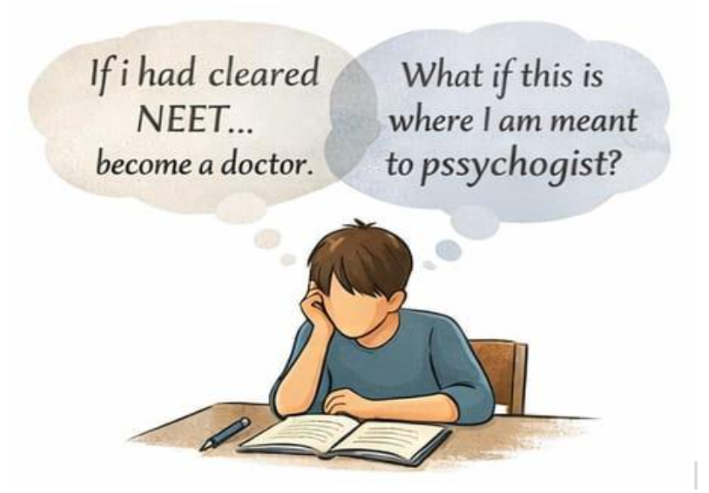
When students enter psychology after being unable to clear NEET, there is often an invisible comparison running quietly in the background. A thought that returns again and again: “If I had cleared it, I would have been a doctor.” This sentence, though rarely spoken aloud, can shape your self-worth more than you realize. It can make psychology feel like a second option instead of a chosen path. You might find yourself feeling slightly apologetic when introducing your course. Defensive when relatives ask, “So what exactly will you become?” Unsure whether this path is respectable enough.
But NEET is an exam. It is not a measure of intelligence, ability, or long-term impact. And psychology is not a diluted version of medicine. It is a rigorous, scientific discipline in its own right. Here is the uncomfortable truth: if you enter psychology believing it is a consolation prize, you will treat it that way. If you enter it with curiosity and commitment, it can shape you in ways medicine never could have. The shift happens when the narrative changes from “I couldn’t become a doctor” to “I am choosing to understand the human mind.”
Psychology is not an easier path. It is a different pathway to alleviating human suffering.
Why this path feels confusing at first?
Unlike medicine, psychology does not offer a single, clearly defined identity. There is no immediate white coat moment. No socially celebrated title early on. No fixed ladder everyone understands.
Instead, you encounter theory, research, human behaviour, statistics, and abstract ideas. The learning feels layered rather than linear. At first, it can seem vague. Slow. Less concrete.
If you came here after preparing intensely for NEET, you might miss the structure, the certainty, and even the status that came with that path. The contrast can feel unsettling. But remember. confusion is part of learning something complex. It is not a sign of inferiority.
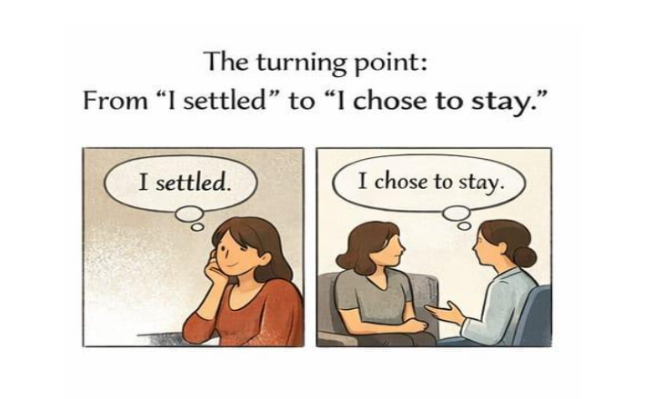
The turning point
At some point, one of two things will happen. You will either: continue seeing psychology as something you “settled for”, or start seeing that understanding the human mind is as complex as understanding the human body, just less visibly measurable.
The turning point comes the day you realize that psychological pain can disable a person as deeply as physical illness. The day you sit with someone who cannot get out of bed because of depression and you understand that no surgery can fix this, something will shift. The day you recognize that behavior, trauma, belief systems and identity all shape health, something will shift.
Psychology will stop being just a Plan B. It will become its own universe. It is true that some students join psychology without passion at first. I opine that is okay. For passion is often developed, not pre-installed. Interest grows with exposure. Depth grows with engagement and confidence grows with competence. It’s completely okay to begin with uncertainty. Transitions take time and mixed feelings are natural.
But if you choose to continue in psychology, try to give yourself permission to truly engage with it. Studying while constantly wishing you were somewhere else can quietly drain your energy and confidence.
If you decide to stay, consider staying wholeheartedly. This field asks for curiosity, reflection, and commitment and it gives back meaning and depth when approached with dedication.
A rarely discussed reality
Some of the most thoughtful psychologists I have met did not start here intentionally. They arrived through detours, through failure, through redirection. Sometimes not clearing NEET is not rejection, it is redirection.
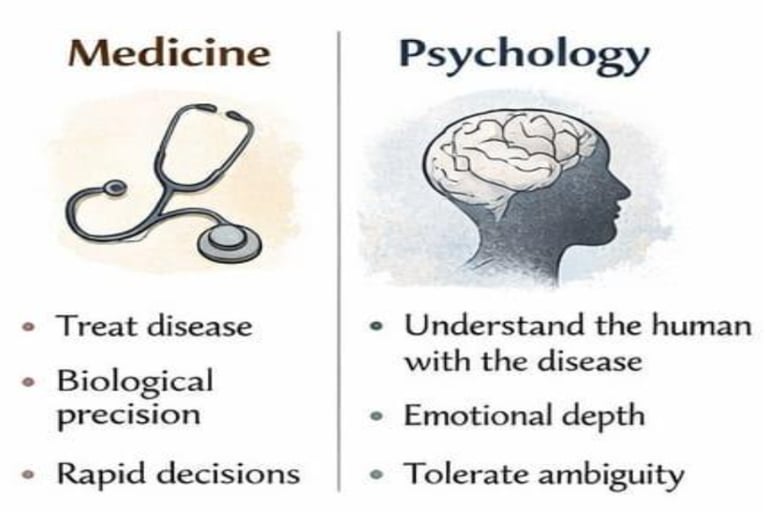
Medicine teaches you to treat disease. Psychology teaches you to understand the human who has the disease.
Both are powerful. Neither is superior. But they require different strengths. Medicine often demands rapid decision-making, biological precision and procedural skill. Psychology demands deep listening, emotional regulation, tolerance for ambiguity, conceptual thinking, and ethical sensitivity.
If you are a psychology student, you must focus on strengthening these capacities intentionally. Working on becoming an active listener is not just about hearing words. It is about noticing emotions, pauses, and patterns beneath them. Build conceptual clarity by connecting theories to real-life behavior instead of memorizing definitions. Develop emotional regulation by journaling your reactions and practicing reflective pauses before responding. Strengthening your research literacy by reading studies regularly and understanding statistics conceptually rather than mechanically helps you grow in the field. Most importantly, cultivate self-awareness, your biases and unresolved emotions shape your professional work more than you realize. When you begin to consciously build these strengths, psychology stops feeling like an alternative path and starts becoming a consciously chosen one.
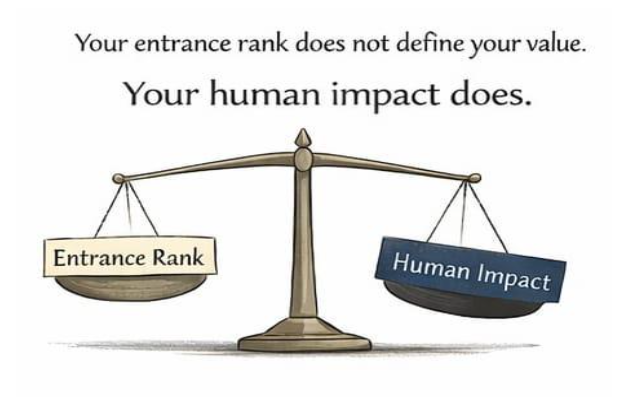
You are not “less than” because your path changed. Your entry point does not define your impact. What will define you is whether you choose to own this path or treat it as temporary exile.
One day, when someone sits across from you in distress, they will not care whether psychology was your first option. They will care whether you are present, competent, and grounded. And that is built through commitment, certainly not through entrance exam rank.
With clarity, not consolation.
About the Author
Annu Kadian is a psychologist, researcher and PhD scholar at Geeta University, Panipat, India. She is working at the intersection of artificial intelligence and mental health. She is a gold medalist in M.Sc. clinical psychology from Amity University, India, recognized for academic excellence and research rigor. Her work explores how AI-mediated environments influence cognition, identity, emotional regulation and help-seeking behaviors among young adults. Through a blend of scientific inquiry and reflective writing, she aims to build evidence-based, accessible conversations around digital mental health, resilience, and academic identity,
Welcome to StatPsyched, your trusted platform for psychology research & statistics learning.
Making statistics & research methodology accessible for students everywhere.
© 2025. All rights reserved.